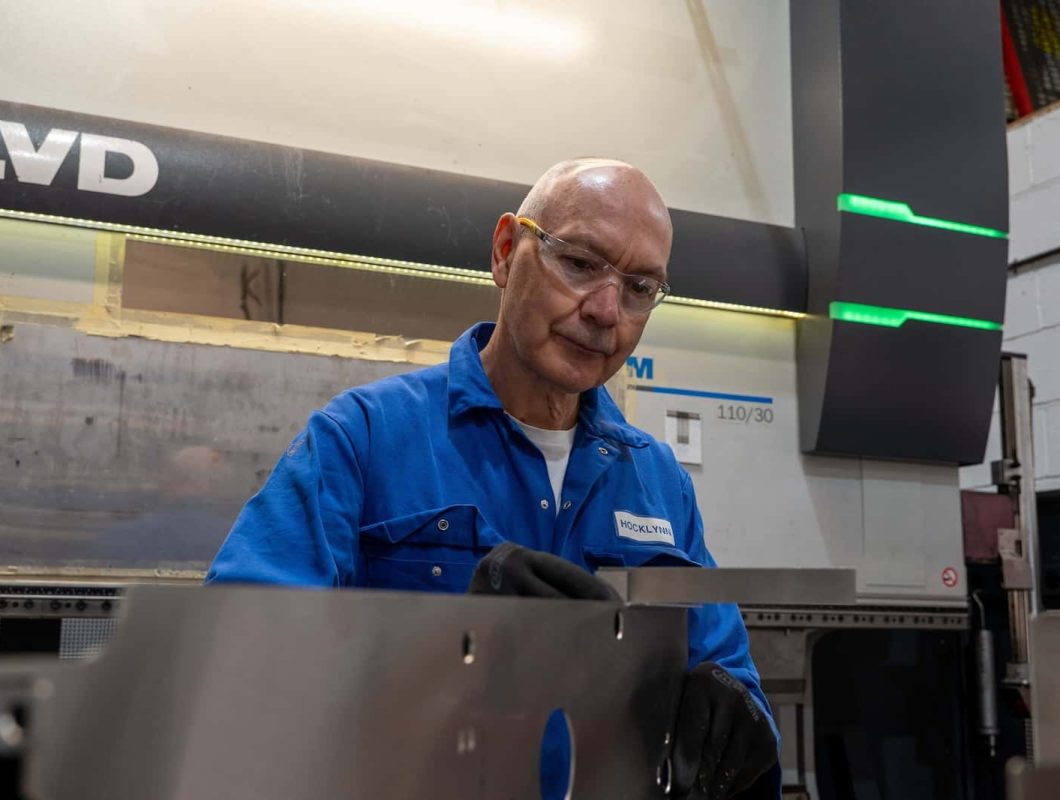
Hocklynn designs and fabricates custom metal machine guards for manufacturing, processing and industrial applications across the UK. From single prototype guards for specialist machinery to repeat production runs of standardised safety guarding panels, we manufacture sheet metal machine guards to your exact specification at our Bristol facility.
Machine guarding is a legal requirement under the Provision and Use of Work Equipment Regulations 1998 (PUWER) and the Supply of Machinery (Safety) Regulations 2008. Every piece of machinery with moving parts, cutting edges, nip points or other mechanical hazards must be fitted with guards that prevent operator contact with dangerous parts during normal operation and foreseeable misuse.
We work with machine builders, OEMs and systems integrators who need metal machine guards fabricated to fit specific equipment. Whether you are building a new production line, retrofitting safety guarding to existing machinery, or need replacement guards that are no longer available from the original equipment manufacturer, we can produce what you need from your drawings, samples or site measurements.
Fixed guards are the most common form of machine guarding. These are permanently attached enclosure panels, covers or barriers that prevent access to hazardous zones during normal operation. Fixed guards are typically secured with fasteners that require tools for removal, ensuring they cannot be displaced without deliberate action. We fabricate fixed guards in sheet steel, stainless steel and aluminium in configurations ranging from simple flat panels to complex multi-piece enclosures that follow the contours of the machinery they protect.
Interlocked guards incorporate safety switches or interlocking devices that shut down the machine when the guard is opened or removed. These guards are essential on machinery where operators need regular access to the guarded zone for loading, unloading, tool changes, cleaning or adjustment. The guard panel itself must be robust enough to prevent access while closed and must operate reliably over thousands of opening cycles. We fabricate interlocked guard panels, doors and hinged access covers designed to work with a wide range of safety interlock devices from manufacturers including Schmersal, IDEM Safety and Fortress Interlocks.
Perimeter fencing and barrier guarding creates a safe zone around an entire machine, cell or automated process. This type of guarding is standard practice around robotic cells, automated assembly lines, palletising systems and other equipment where the hazard zone extends beyond the immediate machine footprint. We fabricate mesh guard panels, solid sheet panels and combination guards that integrate with proprietary fencing systems or are designed as fully bespoke solutions to suit your floor layout and access requirements.
Adjustable guards allow repositioning to accommodate different workpiece sizes, tool configurations or machine setups. These are commonly used on manual machine tools where the guard must adapt to varying operations while still providing effective protection. We fabricate adjustable guard brackets, sliding panels, articulated arms and telescoping covers that give operators the flexibility they need without compromising safety.
The material choice for a machine guard depends on the operating environment, the nature of the hazard, and whether the operator needs visibility into the guarded zone. We fabricate machine guards in three core materials:
Mild steel is the standard choice for the majority of industrial machine guards. It offers excellent strength and impact resistance at a competitive cost, and when powder coated provides a durable, professional finish that withstands years of factory floor use. Most fixed guards, perimeter panels and structural frames are fabricated from mild steel in gauges from 1.2mm to 3mm depending on the application.
Stainless steel machine guards are specified for food and beverage production, pharmaceutical manufacturing, cleanroom environments and any application where the guard will be subject to washdown procedures, chemical exposure or corrosive atmospheres. We work with 304 and 316 grade stainless steel to produce guards that maintain their structural integrity and surface finish in demanding hygiene-critical environments.
Aluminium machine guards serve applications where weight is a consideration or where the guard needs to be removed and refitted regularly by a single operator. Aluminium is also specified where natural corrosion resistance is needed without the cost of stainless steel. We fabricate aluminium guards in standard and custom alloy grades.
Many machine guards incorporate mesh or perforated sheet to allow visibility, ventilation and swarf clearance while maintaining the required level of protection. The aperture size of mesh guarding must comply with the reach distances specified in BS EN ISO 13857, which defines the relationship between guard opening size and safe distance from the hazard. We can advise on the correct mesh specification for your application.
We fabricate machine guards for a wide range of industrial machinery and applications. Common projects include guards for CNC machining centres and turning centres, press brakes and power presses, conveyor systems and automated material handling equipment, robotic welding cells and assembly stations, packaging and labelling machinery, printing and converting equipment, woodworking and panel processing machines, food processing and filling lines, and pharmaceutical production equipment.
We also produce replacement guards for older machinery where the original equipment manufacturer no longer supplies spare parts. If you have a damaged or missing guard and need a replacement fabricated from a sample, drawing or site measurement, we can produce a like-for-like replacement or an improved design that addresses any shortcomings in the original.
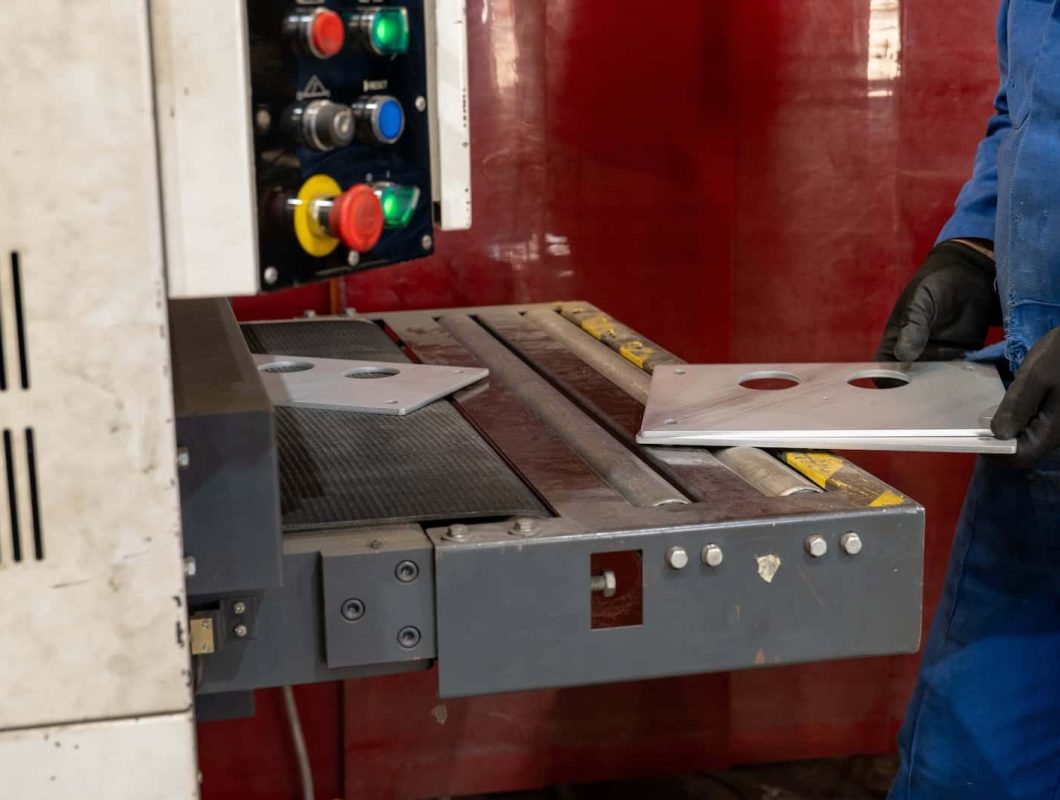
Machine guarding in the UK is governed by a framework of legislation and harmonised standards. The primary regulations are PUWER 1998 (Provision and Use of Work Equipment Regulations), which requires employers to ensure that dangerous parts of machinery are guarded, and the Supply of Machinery (Safety) Regulations 2008, which implements the EU Machinery Directive for new machinery placed on the market.
The key harmonised standards that apply to machine guard design and construction include BS EN ISO 14120 (general requirements for the design and construction of fixed and movable guards), BS EN ISO 13857 (safety distances to prevent hazard zones being reached), BS EN ISO 14119 (interlocking devices associated with guards), and BS EN ISO 12100 (general principles for design and risk assessment of machinery safety).
We fabricate machine guards to meet the physical requirements of these standards, including material strength, guard fixing methods, aperture sizes for mesh and perforated guards, and safe distances from hazards. The responsibility for risk assessment, guard specification and CE marking typically sits with the machine builder or the duty holder responsible for the equipment. We work closely with your safety engineers and machine designers to ensure the guards we fabricate meet the requirements defined in your risk assessment.
Every machine guard project begins with a review of your requirements. You can supply us with CAD files, engineering drawings, sketches, photographs of existing guards, or simply a description of the machinery and the hazards that need guarding. Our engineering team will work with you to develop a manufacturing-ready design that meets your safety requirements and budget.
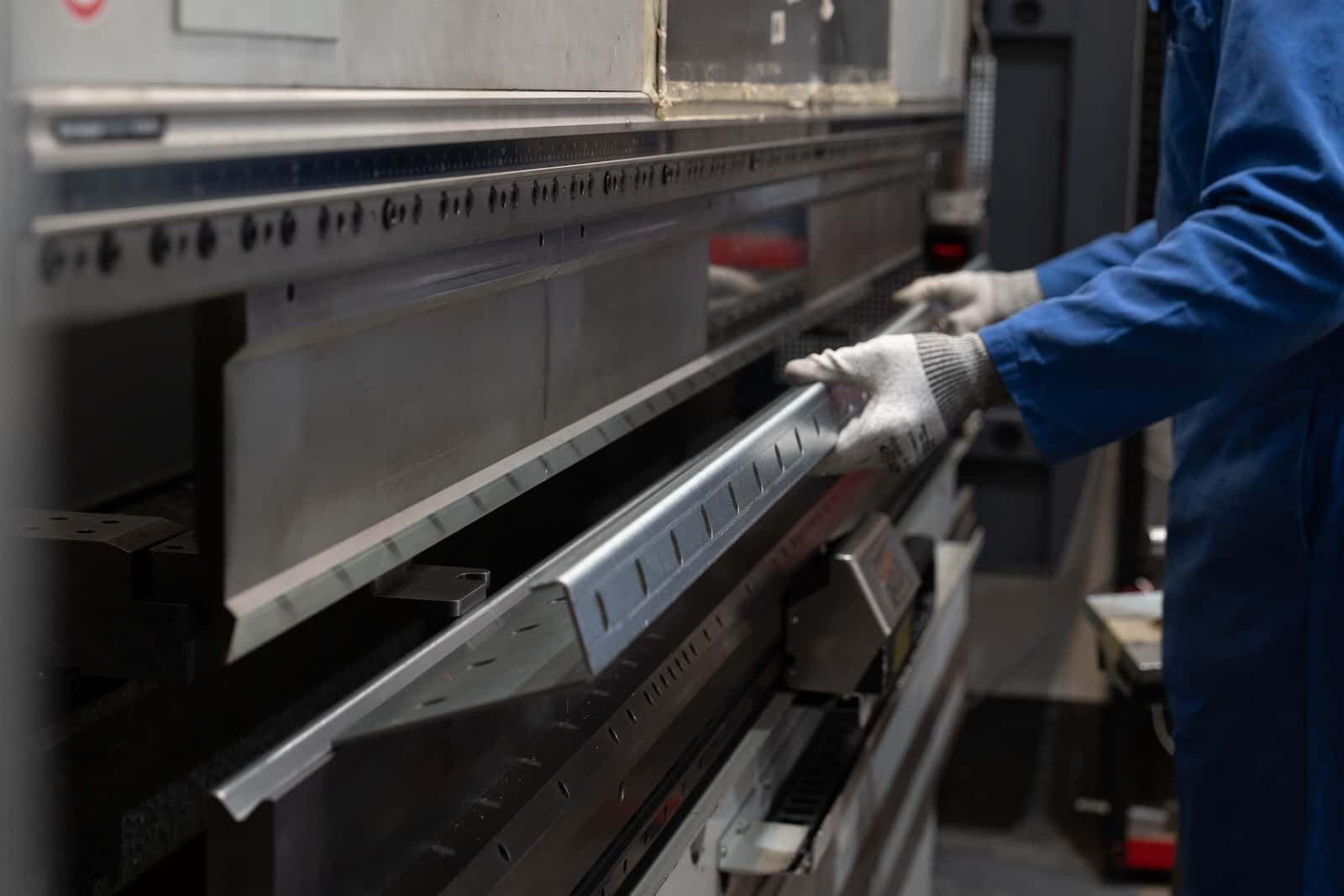
Our fabrication process uses CNC laser cutting for precise profiles and aperture patterns, CNC press brake folding for accurate bends and forms, TIG and MIG welding for strong and clean joints, and powder coating or specialist finishing for a durable and professional appearance. For stainless steel guards, we use electrolytic weld cleaning to restore the corrosion-resistant surface after welding, ensuring the finished guard maintains full material performance.
We produce machine guards in quantities from single prototypes to scheduled repeat production runs. Many of our machine guarding customers are OEMs and machine builders who call off guards in batches against ongoing production schedules. We hold your CNC programmes and tooling setups on file so that repeat orders can be manufactured without re-engineering, keeping costs and lead times to a minimum.
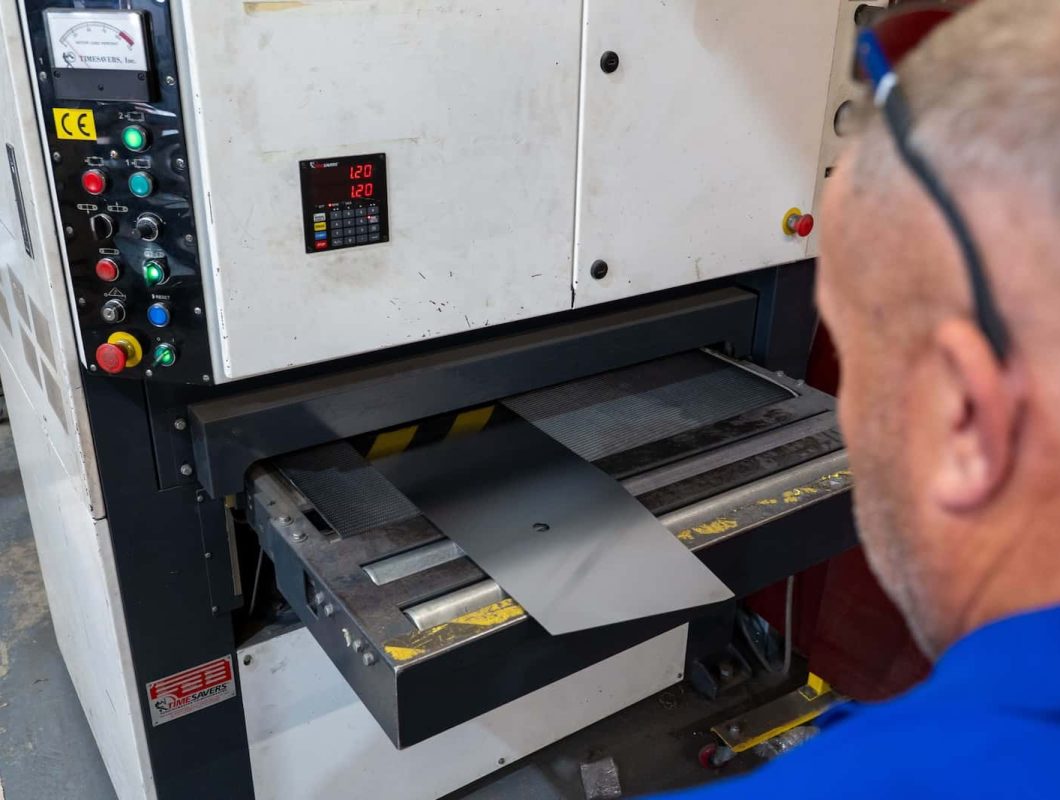
Off-the-shelf machine guards from catalogue suppliers work well for standard machine tools and common equipment types. But many industrial applications involve custom or modified machinery, non-standard layouts, or specific operational requirements that catalogue guards cannot accommodate. In these situations, custom fabricated machine guards provide a solution that fits exactly, complies with the relevant safety standards, and integrates cleanly with your equipment.
Custom fabrication also allows you to consolidate multiple guard components into fewer parts, reducing assembly time and improving the overall rigidity and appearance of the finished guarding. We can incorporate features such as integrated hinges, quick-release latches, inspection windows, cable entry points, ventilation openings and labelling zones directly into the guard design, eliminating the need for secondary operations or aftermarket modifications.
If you need custom metal machine guards for new or existing machinery, contact our team to discuss your requirements. We can work from your drawings or help develop a solution from scratch based on your machinery and operational needs.