Hocklynn provides powder coating as an integrated part of our sheet metal fabrication service. Every component we fabricate can be powder coated to your colour and finish specification before dispatch, giving you a complete manufacturing solution from flat sheet through to finished, coated products ready for assembly or installation.
Powder coating is the standard finishing process for sheet metal fabrication products across the UK. It provides a durable, attractive and environmentally responsible finish that outperforms wet paint in most industrial and commercial applications. From RAL colour matched enclosures and control panels to textured finishes on machine guards and equipment housings, powder coating delivers the combination of protection and appearance that fabricated metal products require.
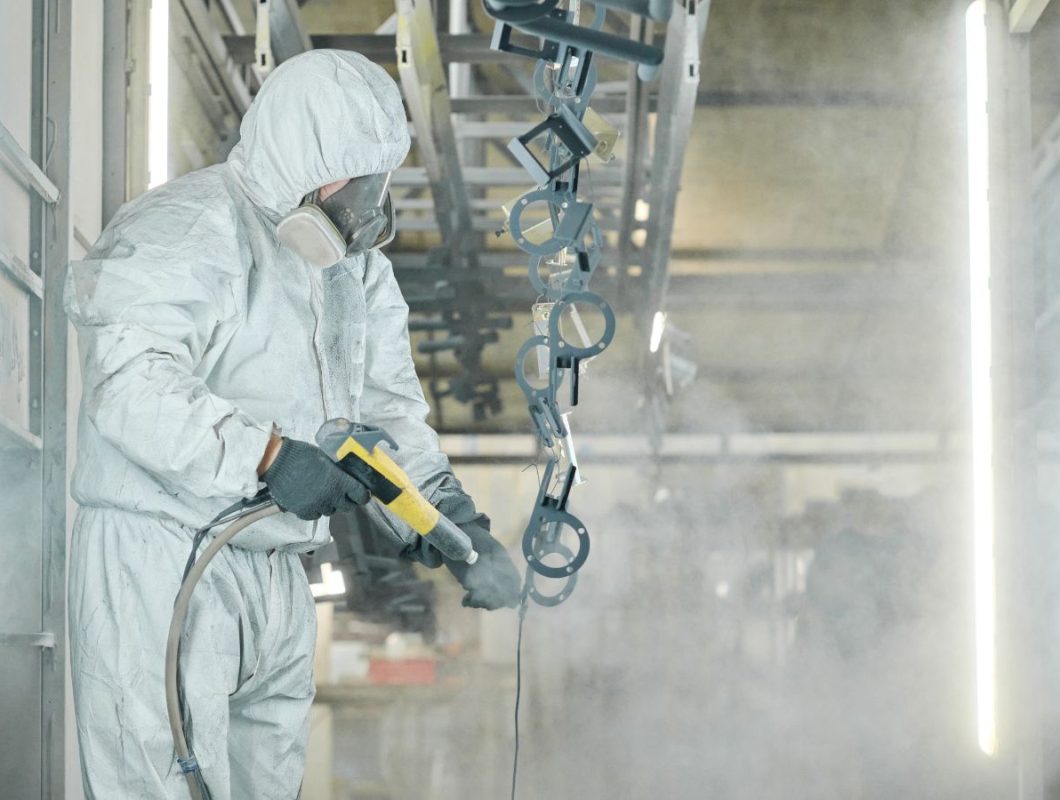
Powder coating is a dry finishing process that applies a durable protective and decorative layer to metal surfaces. Unlike traditional wet paint, powder coating uses no solvents. The coating material is a finely ground mixture of pigment, resin, and other additives that is applied as a dry powder to the metal surface using an electrostatic spray gun. The powder particles are given an electrostatic charge during application, which causes them to adhere evenly to the grounded metal workpiece.
Once the powder application is complete, the coated parts are placed in a coating oven where they are heated to a temperature that causes the powder to melt, flow and cure into a continuous, hard film. This curing process creates a chemical bond between the coating and the metal surface that is significantly more resistant to chipping, scratching, fading and corrosion than conventional paint finishes. The result is a uniform, high-quality finish that is more durable and more consistent than wet paint can typically achieve.
Powder coatings are available in a vast range of colours, textures and gloss levels. Standard polyester powder coatings suit the majority of indoor and outdoor applications, while specialist powder coatings including epoxy, polyester-epoxy hybrids, and polyester matt formulations address specific performance requirements such as enhanced chemical resistance, UV stability, or particular visual effects. The powder coating industry continues to develop new formulations that extend the range of finishes and performance characteristics available.
The quality of a powder coating finish depends as much on surface preparation as on the powder application itself. Proper pre-treatment is essential to ensure the powder adheres correctly and the finished coating performs as expected over its service life.
Pre-treatment typically involves cleaning the metal surface to remove oils, grease, dirt and any contaminants from the fabrication process. Depending on the material and the application, pre-treatment may include chemical cleaning, phosphating or other conversion coating processes that improve adhesion and corrosion resistance. The quality of pre-treatment powder preparation directly affects the durability and appearance of the finished coating.
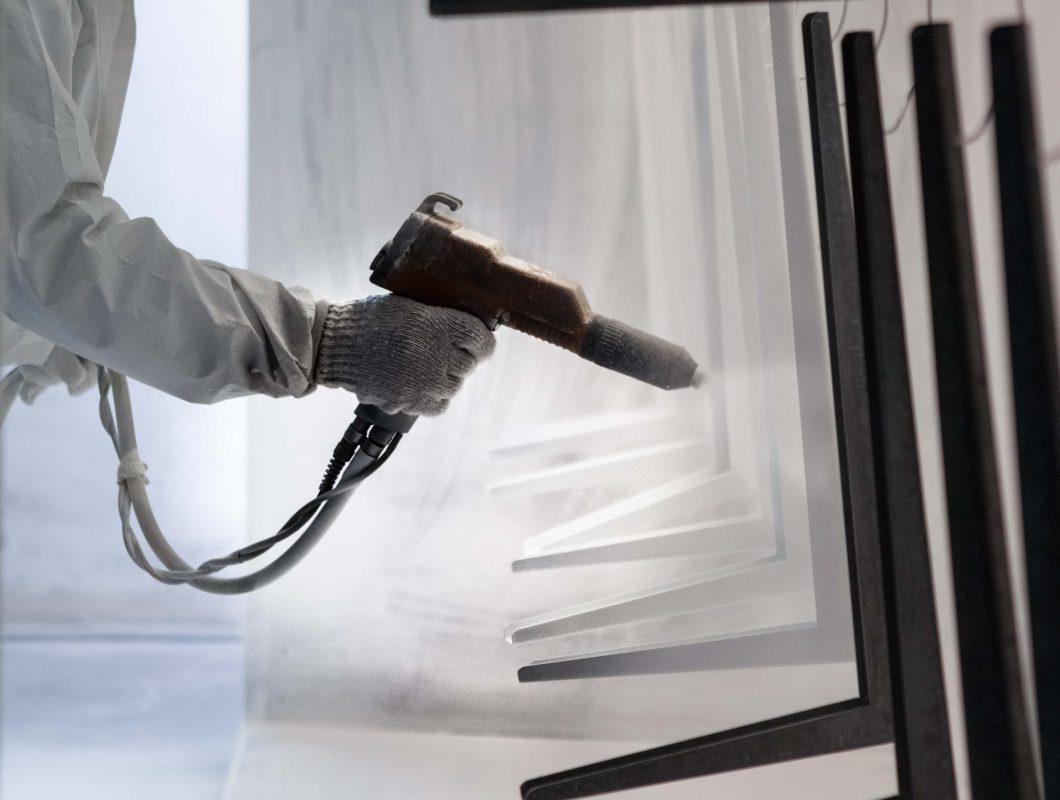
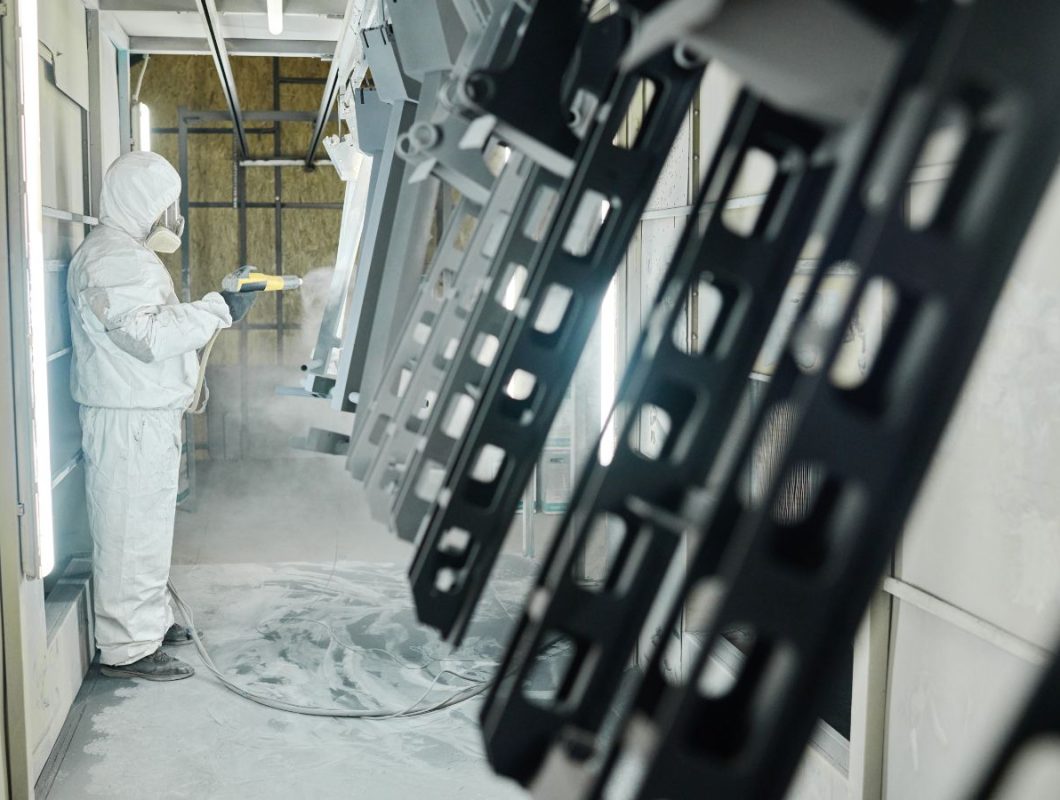
After pre-treatment, the powder is applied using electrostatic spray equipment. The charged powder particles wrap around the component and adhere to all exposed surfaces, including edges and recesses that are difficult to coat evenly with liquid paint. This electrostatic powder application method produces a more uniform coating thickness than brush or spray painting, with less waste and no runs or drips.
The coated components then enter the curing oven, where the powder melts and flows into a continuous film before cross-linking into its final hardened state. Curing temperatures and times vary depending on the powder type, but typical polyester powder coatings cure at temperatures between 180 and 200 degrees Celsius. Once cured, the coating is immediately hard and ready for handling, with no drying time required.
We offer powder coating in the full RAL colour range, giving you access to thousands of standard colours for your fabricated products. RAL colours are the industry standard colour matching system used across manufacturing and construction in the UK and Europe, ensuring consistent colour reproduction across different batches, suppliers and products.
Beyond standard colours, we can source specialist powder coatings including metallic finishes, textured finishes, fine texture and sand texture effects, high gloss, semi-gloss, satin and matt finishes. The choice of gloss level and texture affects both the visual appearance and the practical performance of the coating. Textured finishes, for example, are more effective at hiding minor surface imperfections and are more resistant to showing fingerprints and handling marks than smooth gloss finishes.
For customers with specific corporate colour requirements, we can match powder coatings to your brand colours using RAL, BS or Pantone references. Colour matched powder coating ensures that your fabricated enclosures, panels, cabinets and equipment housings present a consistent, professional appearance that aligns with your brand identity.
Powder coating offers several significant advantages over traditional wet paint for industrial and commercial metal finishing applications. Durability is the primary advantage. A properly applied powder coating is more resistant to impact, abrasion, chemicals, moisture and UV degradation than most liquid paint systems. This translates directly into longer service life, lower maintenance costs and better appearance retention over time.
Environmental performance is another important benefit. Powder coating is a dry finishing process that produces no volatile organic compounds (VOCs) during application. There are no solvents to evaporate, no hazardous waste from overspray, and unused powder can be recovered and recycled. This makes powder coating a more environmentally responsible choice than solvent-based paint systems.
Consistency of finish is inherently better with powder coating than with wet paint. The electrostatic application method produces even coating thickness across the entire component, and the oven curing process ensures uniform hardness and adhesion. There are no brush marks, runs, sags or orange peel effects that can affect the quality of hand-applied or spray-painted finishes.
Cost effectiveness improves with powder coating at production volumes. While the initial setup for powder coating involves higher equipment costs than a paint booth, the lower material waste, faster throughput, elimination of drying time, and reduced finishing labour make powder coating more economical for fabricated metal products, particularly at the batch quantities typical of our production work.
Powder coating is suitable for virtually any metal product that requires a protective and decorative finish. The range of products we powder coat as part of our fabrication service includes electrical enclosures and control panels, machine guards and safety covers, equipment housings and cabinets, brackets, frames and structural components, architectural metalwork and building services products, and OEM components and assemblies destined for integration into our customers’ own products.
For outdoor applications, powder coating provides the weather resistance needed to protect metal components from rain, UV exposure, temperature cycling and atmospheric pollution. Outdoor electrical enclosures, EV charging infrastructure, street furniture, signage structures and agricultural equipment all benefit from the long-term corrosion protection that quality powder coatings deliver in UK weather conditions.
For indoor industrial environments, powder coating protects against the oils, chemicals, cleaning agents and physical impact that factory and workshop equipment encounters daily. The hard, smooth surface of a powder coated finish is easy to clean and maintain, which is particularly important for equipment used in food production, pharmaceutical manufacturing and other hygiene-critical environments.
Powder coating applies a durable, protective and decorative finish to metal surfaces. The coating protects the underlying metal from corrosion, impact damage, chemical exposure, UV degradation and general wear. It also provides the colour, texture and gloss level specified for the finished product. Powder coating is the most widely used finishing method for fabricated sheet metal products in the UK.
For individual one-off items, wet paint can be cheaper due to lower setup costs. For batch production of fabricated metal parts, powder coating is typically more cost effective due to lower material waste, faster throughput and the elimination of drying time. The superior durability of powder coating also means lower total cost of ownership over the product’s service life, as powder coated products require less maintenance and recoating than painted alternatives.
Powder coating requires an oven to cure, which limits the maximum size of components that can be coated to the dimensions of the available oven. Very large fabrications may need to be coated in sections or finished with an alternative method. Touch-up of damaged powder coating in the field is also more difficult than with wet paint, as the repair requires heat curing. For most fabricated products, however, the advantages of powder coating significantly outweigh these limitations.
All Hocklynn fabricated products can be supplied powder coated in your specified RAL colour and finish. Powder coating is managed as part of our production process, so your parts arrive ready to use with no additional finishing required. Contact our team to discuss your powder coating requirements or to request a quote for fabricated and finished components.
Call 0117 951 7572 or email sales@hocklynn.co.uk