Hocklynn provides TIG welding and MIG welding services as a core part of our sheet metal fabrication capability. Our welders join mild steel, stainless steel, aluminium and brass components using the welding process best suited to each material, application and visual requirement. From precision TIG welds on visible stainless steel enclosures to high-productivity MIG welding on structural mild steel assemblies, our welding capability supports the full range of fabricated products we manufacture at our Bristol facility.
Welding is where sheet metal parts become finished products and assemblies. Laser cut and folded components are joined into enclosures, housings, frames, brackets and complete fabricated assemblies by our experienced welding team. The quality of the welds determines the structural integrity, the seal performance, and the visual appearance of the finished product. Our welders understand how weld sequence, heat input, fixturing and technique affect dimensional accuracy and the final result.
TIG welding, also known as tungsten inert gas welding or GTAW (Gas Tungsten Arc Welding), is a welding process that uses a non-consumable tungsten electrode to produce the weld. The tungsten electrode creates an electric arc between itself and the workpiece, generating the heat needed to melt the base metal. A filler metal, in the form of a filler rod, is fed into the weld pool manually by the welder to build up the joint. An inert gas, typically argon, flows from the TIG torch to shield the weld pool from atmospheric contamination during the welding process.
The TIG welding process gives the welder exceptional control over the weld. The welder controls the heat input through the welding current (often using a foot pedal or torch-mounted amperage control), the filler metal deposition through manual rod feeding, and the arc length through torch positioning. This level of control is what makes TIG welding the preferred process for applications where weld quality, appearance and precision matter most.
TIG welding produces clean, precise welds with minimal spatter. Because the tungsten electrode does not melt during the process (unlike MIG welding where the wire electrode is consumed), the welder has complete control over how much filler metal enters the weld pool. This makes TIG welding ideal for thin materials, visible welds, and joints where post-weld finishing must be kept to a minimum.
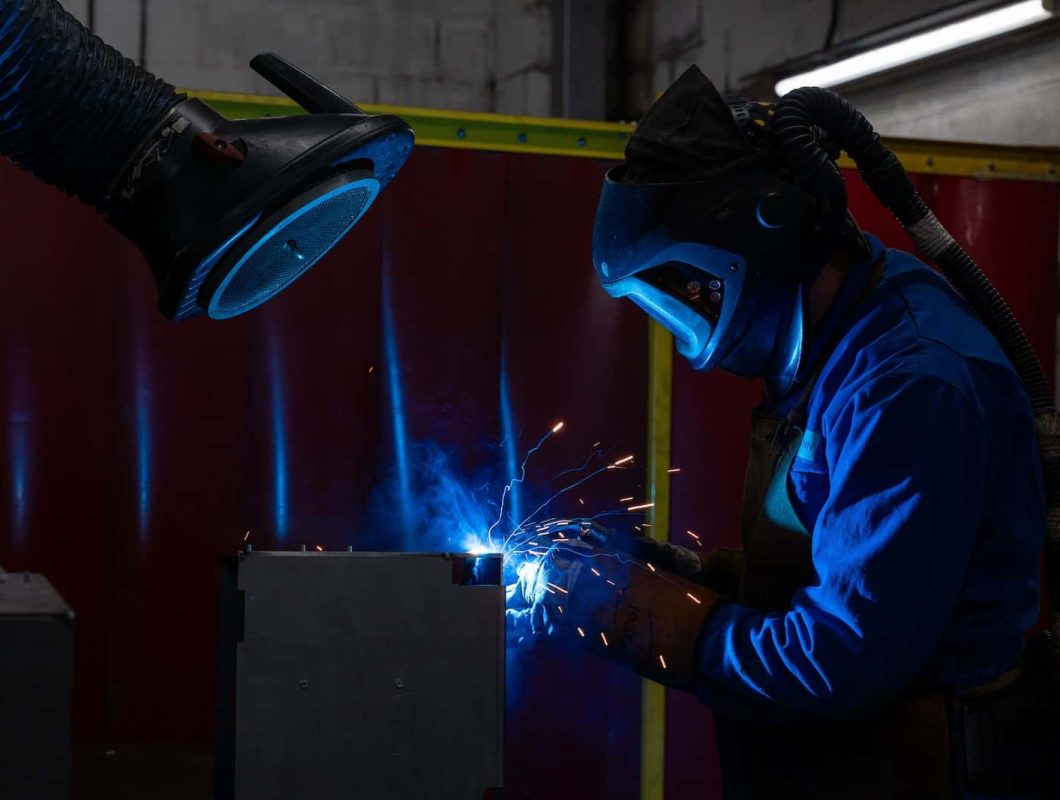
TIG welding is our primary welding process for stainless steel fabrication. The precision control of heat input and filler rod deposition that TIG welding provides is essential for stainless steel, where excessive heat can cause warping, discolouration and loss of corrosion resistance in the heat-affected zone. Our TIG welders work with 304 and 316 grade stainless steel daily, producing welds that meet both structural and visual requirements.
Aluminium welding is another core application of our TIG welding capability. Aluminium is a challenging material to weld due to its high thermal conductivity, low melting point and the tenacious oxide layer that forms on its surface. TIG welding with alternating current (AC) breaks down the aluminium oxide layer while the arc melts the base metal, allowing clean fusion. Our welders use high-purity argon shielding gas and appropriate filler rods selected for the specific aluminium alloy being welded.
TIG welding on mild steel is used where weld appearance is important or where the material thickness requires the fine control that TIG provides. Thin gauge mild steel panels, visible external welds on enclosures, and precision assemblies where distortion must be minimised all benefit from the lower heat input and precise control of the TIG welding process.
MIG welding (Metal Inert Gas welding, also known as GMAW) is a welding process that uses a continuously fed wire electrode which is consumed during welding to fill the joint. The wire electrode is fed through the MIG torch at a controlled rate, and an electric arc between the wire and the workpiece generates the heat to melt both the wire and the base metal. An inert or active shielding gas protects the weld pool from atmospheric contamination.
MIG welding is faster than TIG welding and is our primary process for mild steel fabrication where production speed is a priority and the welds will not be visible in the finished product. Internal seams on enclosures, structural joints on frames and brackets, and heavy gauge assemblies all benefit from the higher deposition rate and productivity of MIG welding.
While MIG welding does not offer the same level of precision and visual quality as TIG welding, a skilled MIG welder produces strong, consistent welds that meet structural and dimensional requirements. On many fabricated products, MIG welding is used for internal and structural joints while TIG welding is reserved for visible external seams, combining the efficiency of MIG with the finish quality of TIG on the same assembly.
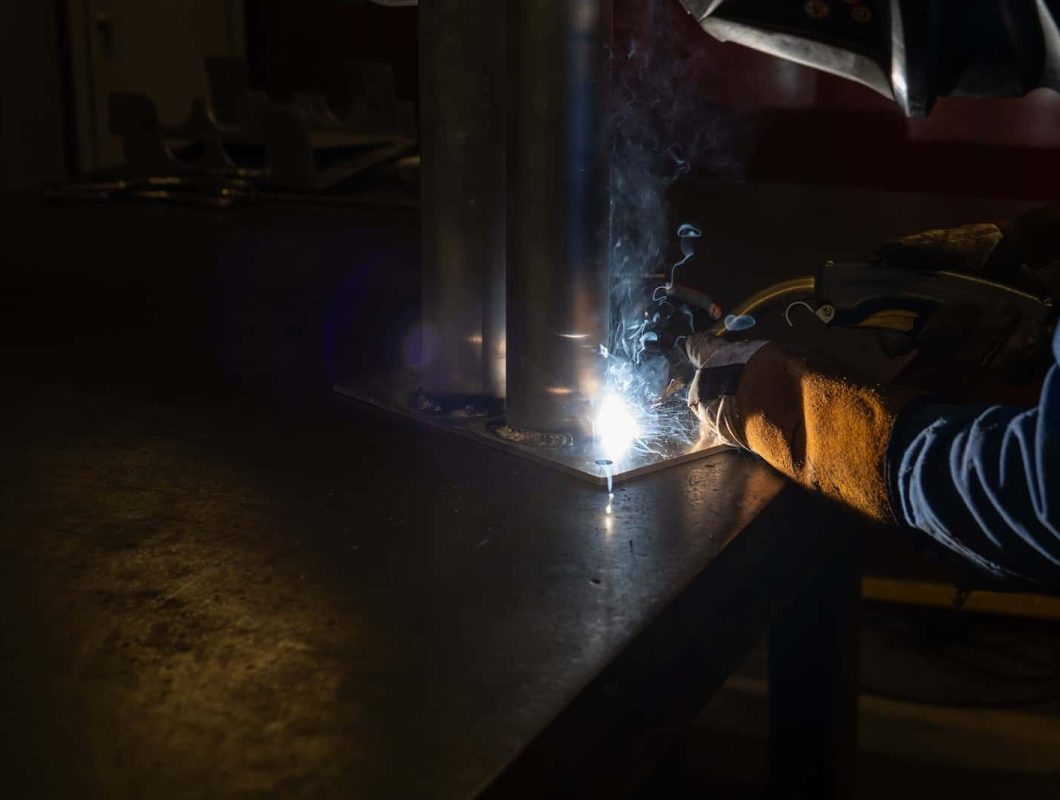
Choosing between TIG welding and MIG welding depends on the material, the application and the required finish quality. TIG welding excels where precision, appearance and control are priorities. It produces cleaner welds with less distortion and is the preferred process for stainless steel, aluminium and visible joints. However, TIG welding is slower and requires higher welder skill, which makes it more expensive per metre of weld.
MIG welding is the right choice where production speed matters and where the welds will be hidden or where a ground-back finish is acceptable. It handles thicker materials more efficiently than TIG and is the standard process for mild steel structural fabrication. MIG welding also has a shorter learning curve, making it more practical for high-volume production work.
In practice, most of our fabricated products use both processes. Our welders select the welding technique that best serves each joint on each component. This flexibility means you get the optimal combination of strength, appearance and cost without being limited to a single welding process.
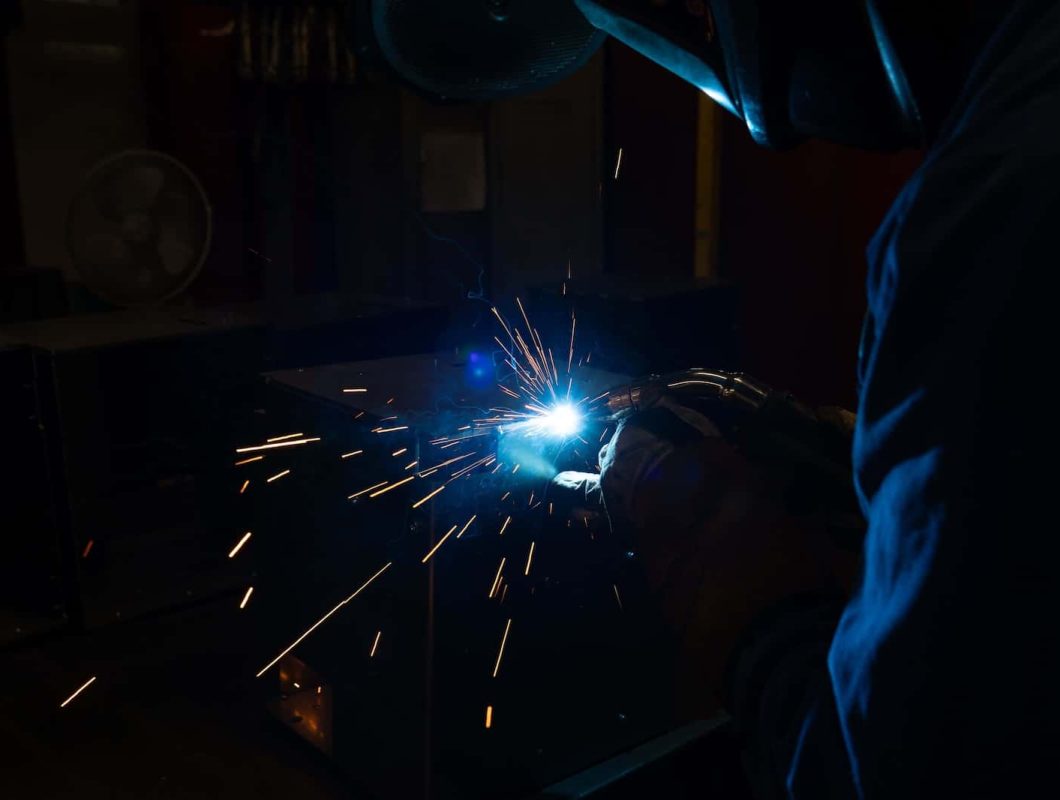
Weld quality is fundamental to the structural integrity and appearance of every fabricated product we manufacture. Our quality control process begins before the arc is struck, with joint preparation, fit-up and fixturing that ensure components are positioned correctly and consistently for welding.
Our welders set welding parameters including current, voltage, travel speed, gas flow rate and filler rod selection based on the material, thickness and joint configuration. These parameters are documented for repeat production, ensuring that the same welding conditions are applied every time a particular assembly is manufactured. This consistency is essential for maintaining dimensional accuracy, structural performance and visual appearance across production batches.
Post-weld inspection includes visual examination of all welds for defects such as porosity, undercut, lack of fusion and excessive spatter. Dimensional checks confirm that welded assemblies meet drawing tolerances, and any welds that do not meet the required standard are reworked before the assembly proceeds. For stainless steel fabrication, we use electrolytic weld cleaning to restore the corrosion-resistant oxide layer at welded joints, ensuring that the finished assembly maintains full material performance.
Our welding department is equipped with professional TIG welding and MIG welding machines capable of handling the full range of materials and thicknesses we fabricate. Our TIG equipment has AC/DC capability, giving our welders the flexibility to weld stainless steel and mild steel on DC and aluminium on AC.
Our MIG welding equipment handles mild steel and stainless steel across the full range of gauges we fabricate. Dedicated wire feeders and torch setups for different materials and wire diameters allow our welders to switch between jobs efficiently without cross-contamination between material types.
Welding jigs and fixtures support consistent positioning and repeatability across production runs. Custom fixtures are built for products that require precise alignment during welding, and these fixtures are stored alongside the CNC cutting and folding programmes for each product, ensuring that repeat orders are manufactured to the same standard every time.
Welding is integral to almost every fabricated assembly we produce. Electrical enclosures require sealed welds that prevent moisture and dust ingress. Structural frames and machine bases require welds with full penetration and adequate strength for the loads they carry. Visible enclosures and equipment housings require TIG welds that present a clean, consistent appearance without grinding.
Our welders produce welds for applications including sealed enclosures for electrical, electronic and control systems, structural steel frames and equipment bases, stainless steel food production and pharmaceutical equipment, aluminium housings and lightweight assemblies, brackets, mounts and fixing components, and complex multi-component assemblies requiring sequential welding to control distortion.
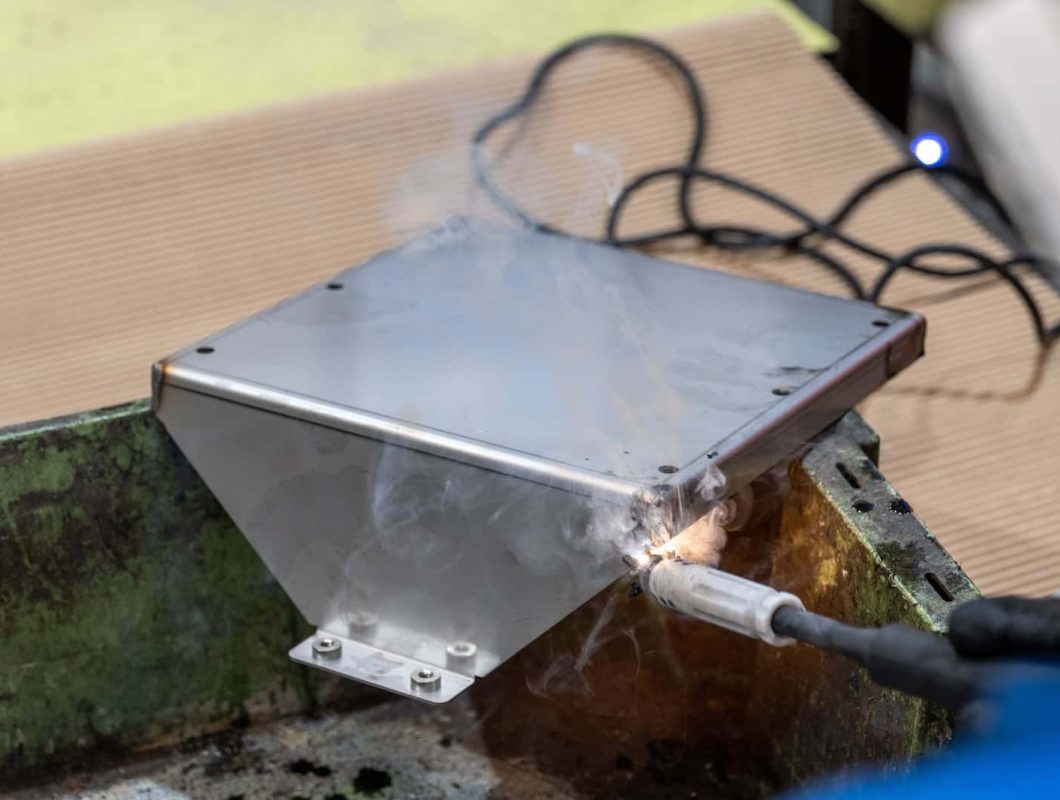
TIG stands for Tungsten Inert Gas. It describes the key elements of the welding process: a tungsten electrode that creates the arc, and an inert shielding gas (usually argon) that protects the weld pool from atmospheric contamination. The formal technical designation for TIG welding is GTAW, Gas Tungsten Arc Welding.
When performed correctly, both TIG welds and MIG welds achieve full-strength joints that meet the structural requirements of the application. The strength of a weld depends on joint design, preparation, welding parameters and welder skill rather than the welding process itself. TIG welding is preferred for applications where the combination of strength, appearance and precision matters, while MIG welding is preferred where speed and production efficiency are the priorities.
TIG welding is used for applications where precision, appearance and control are essential. In sheet metal fabrication, TIG welding is the standard process for stainless steel and aluminium components, visible external welds on enclosures and housings, thin gauge materials where heat control prevents distortion, and any joint where the weld must meet both structural and visual requirements.
TIG welding requires the welder to simultaneously control the torch position, arc length, filler rod feed and welding current while maintaining a consistent travel speed. Unlike MIG welding where the wire feed is automatic, TIG welding demands manual coordination of both hands and often a foot pedal for amperage control. This makes TIG welding a highly skilled process that takes significant training and practice to master. Our welders have extensive experience across all three of our core materials.
In addition to TIG and MIG welding, our fabrication facility includes spot welding and stud welding capability. Spot welding joins overlapping sheet metal panels using localised resistance heating, producing a series of discrete weld nuggets without the need for filler metal, gas shielding or visible weld seams. Spot welding is fast, efficient and produces clean joints that are ideal for internal structures, panel assemblies and applications where a smooth external surface is required.
Stud welding attaches threaded studs, unthreaded pins and standoffs directly to sheet metal panels without drilling, tapping or riveting. The process uses an electric arc to momentarily melt the base of the stud and the sheet surface, fusing them together in a fraction of a second. Stud welding is widely used on enclosure back panels, mounting plates and internal components where threaded fixing points are needed on one side of the sheet without any mark on the opposite face.
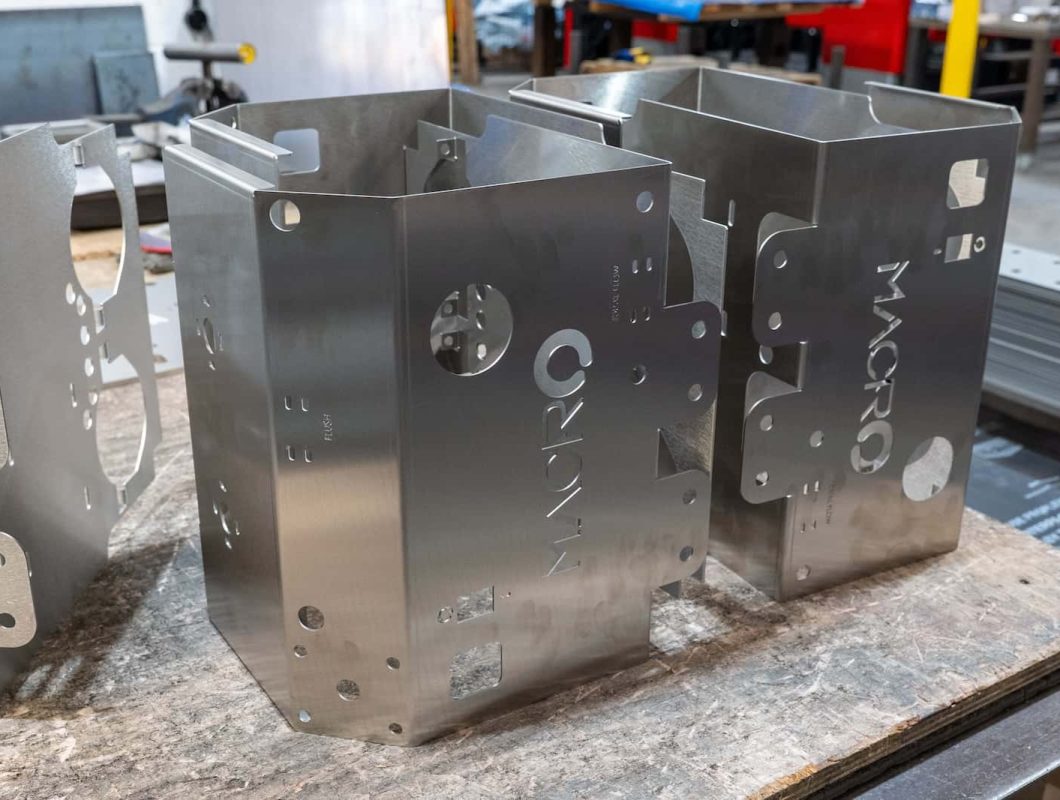
If you need welded sheet metal assemblies manufactured to a high standard, contact Hocklynn to discuss your requirements. Whether your project needs precision TIG welding on stainless steel, production MIG welding on mild steel, or a combination of processes across a complex assembly, our welding team has the skills and equipment to deliver.
Call 0117 951 7572 or email sales@hocklynn.co.uk