Hocklynn is a specialist mild steel fabrication company based in Bristol, producing custom metal parts and assemblies for OEMs, equipment manufacturers and systems integrators across the UK. Mild steel is the most commonly specified material through our workshop, used across the widest range of projects and applications.
As a low-carbon steel, mild steel offers an excellent combination of formability, weldability and strength at a competitive cost. Its carbon content is typically below 0.25%, which makes it easier to cut, bend and weld than higher-carbon or alloy steels. These properties make mild steel sheet metal fabrication the practical choice for the majority of industrial components, enclosures and structural assemblies.
We handle the complete fabrication process in-house, from laser cutting and CNC forming mild steel sheet through to MIG and TIG welding, fastener insertion and powder coating. Whether you need a one-off prototype or scheduled repeat production, our mild steel fabrication services cover the full process under one roof.
Choosing the right mild steel grade affects formability, surface finish and cost. We stock and fabricate in the grades that cover the majority of industrial and commercial applications.
CR4 cold rolled steel is the standard for precision sheet metal work. It has a clean, smooth surface finish, holds tight tolerances during forming, and produces neat edges when laser cut. CR4 is the default choice for enclosures, panels, brackets and any components where surface quality and dimensional accuracy matter.
Hot rolled steel is available in thicker gauges and is suited to structural components, heavy brackets and frames where surface finish is less critical. HR steel costs less than cold rolled and is commonly specified for parts that will be powder coated or painted after fabrication.
Pickled and oiled steel has had its mill scale removed by acid treatment, leaving a cleaner surface that is easier to weld and coat. It bridges the gap between hot rolled and cold rolled for applications that need better surface preparation without the cost of CR4.
For structural applications, we fabricate in S235, S275 and S355 grades. These structural steels offer increasing yield strength and are specified where load-bearing performance is a design requirement. We can advise on which grade and thickness suits your project.
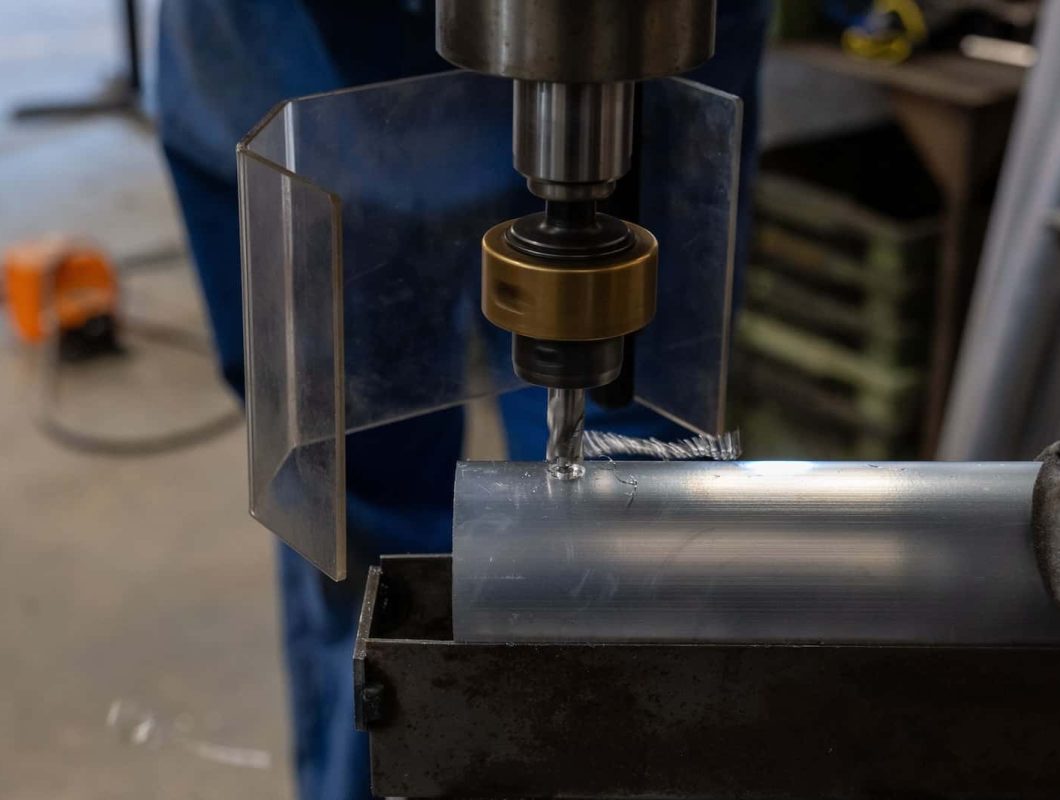
Every mild steel project starts with a technical review. We check your drawings or CAD files for dimensions, tolerances, material selection and bend sequences before any metal sheets are ordered. This upfront review catches potential issues early and avoids rework on the shop floor.
From there, parts move through a controlled fabrication process: CNC fibre laser cutting for accurate profiles, press brake forming on our LVD 8-axis machines, and welding for structural joints and assemblies. Secondary operations including CNC machining, fastener insertion, deburring and powder coating complete the finished product.
Running the full process in-house means fewer suppliers, shorter lead times and consistent quality from first article through to production batches.
Our CNC fibre laser cuts mild steel sheet cleanly across a range of thicknesses, producing parts with minimal burr and tight dimensional accuracy. Laser cutting is faster and more precise than traditional methods like plasma cutting, particularly on thinner gauges where edge quality matters.
We cut mild steel up to 20mm thick, handling everything from intricate apertures and ventilation patterns through to simple blanks and brackets. Nesting software optimises sheet usage to keep material waste down across production runs.
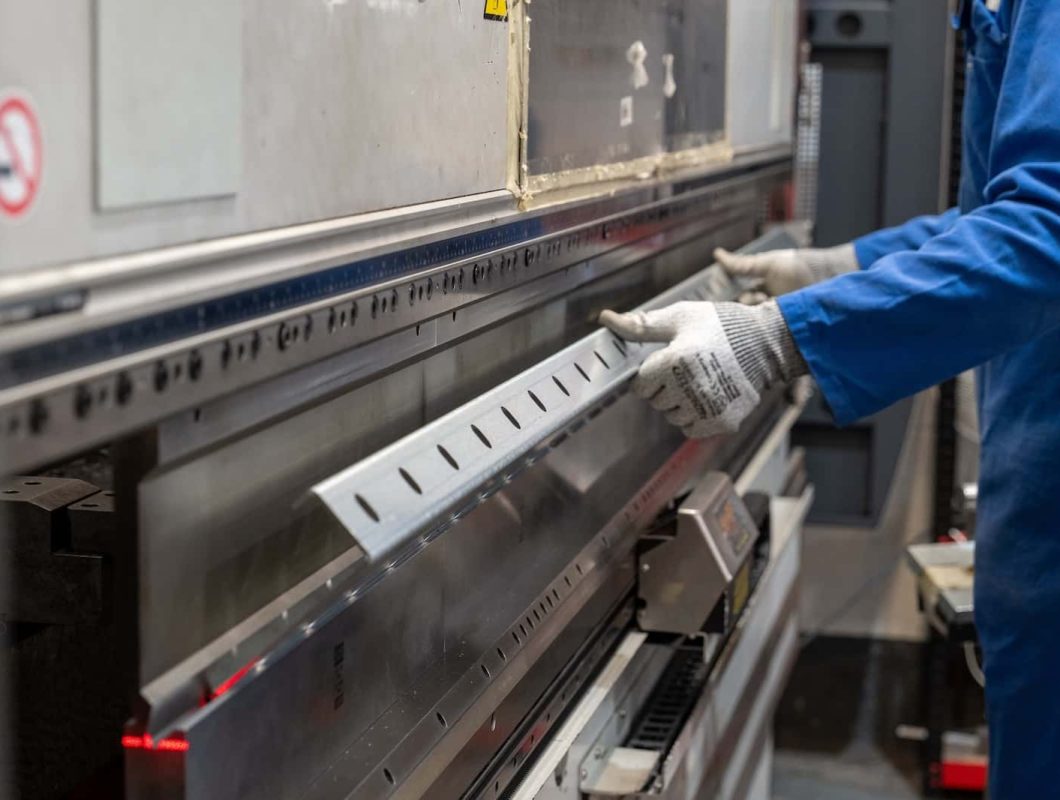
Mild steel is one of the most forgiving materials to form. Its low carbon content gives it excellent ductility, which means it bends cleanly without cracking and holds its shape with predictable springback. This makes forming mild steel straightforward compared to stainless or high-strength alloys.
Our LVD 8-axis press brakes handle metal bending in mild steel sheet up to 3 metres in length, producing everything from simple single-bend brackets to complex multi-bend enclosures and chassis components. Press brake programs are stored digitally, so repeat orders are set up in minutes with identical results every time.
For components that need rolling, profiling or other shaping operations, we carry out these processes in-house or manage them through established partners.
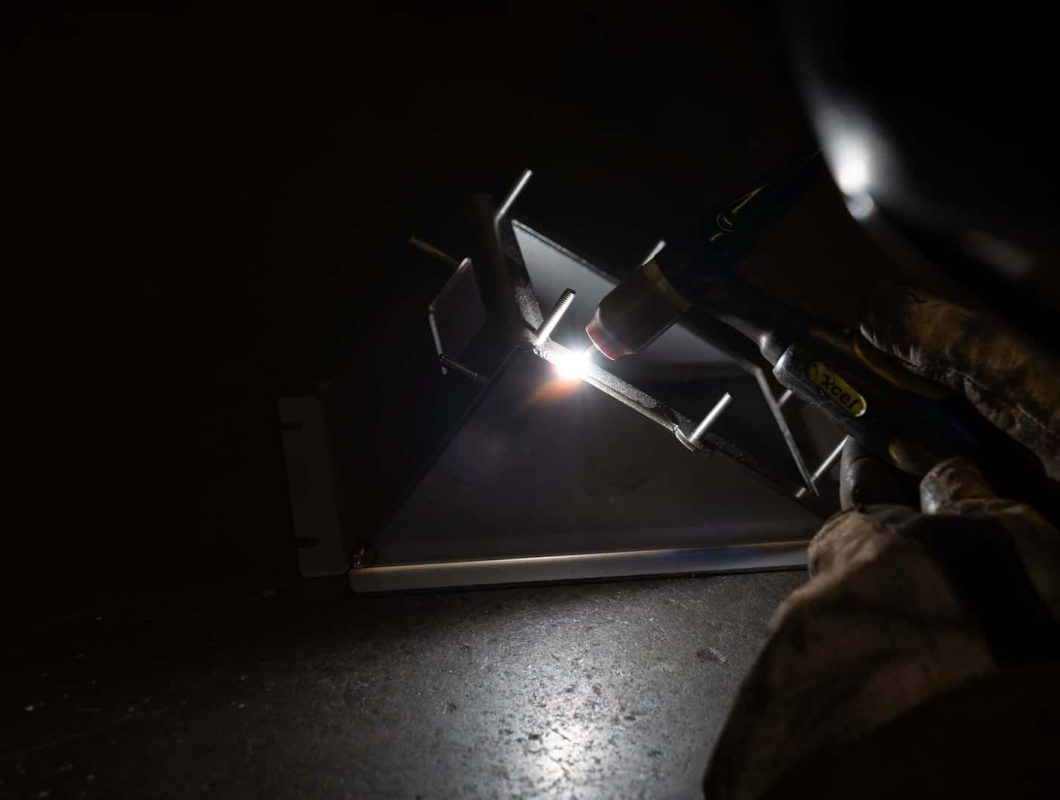
Mild steel welds cleanly using both MIG and TIG techniques. MIG welding is the standard for most mild steel fabrication work, offering fast deposition rates and strong joints on thicker sections. TIG welding is used where a neater weld bead is required, typically on visible components or thinner gauge material.
We also carry out spot welding and stud welding on mild steel assemblies. Spot welding is efficient for joining overlapping metal sheets without filler material, commonly used on enclosure seams and panel assemblies. Stud welding provides threaded fastening points without drilling through the parent material.
All welded mild steel components are inspected before moving to finishing. Weld spatter is removed, seams are dressed where needed, and surfaces are prepared for powder coating or painting.
Unlike stainless steel or aluminium, mild steel has no natural corrosion resistance. Every mild steel component that will be exposed to moisture or handling needs a protective finish. Powder coating is the most common solution across a wide range of RAL colours.
For applications requiring additional protection, we manage zinc plating, galvanising and other specialist coatings through trusted local partners. Pre-galvanised mild steel is also available as a material choice, providing corrosion resistance from the outset without a separate finishing step.
Surface preparation before coating includes deburring, degreasing and bead blasting to ensure adhesion. The quality of the finish depends on the quality of the preparation, and we take this seriously.
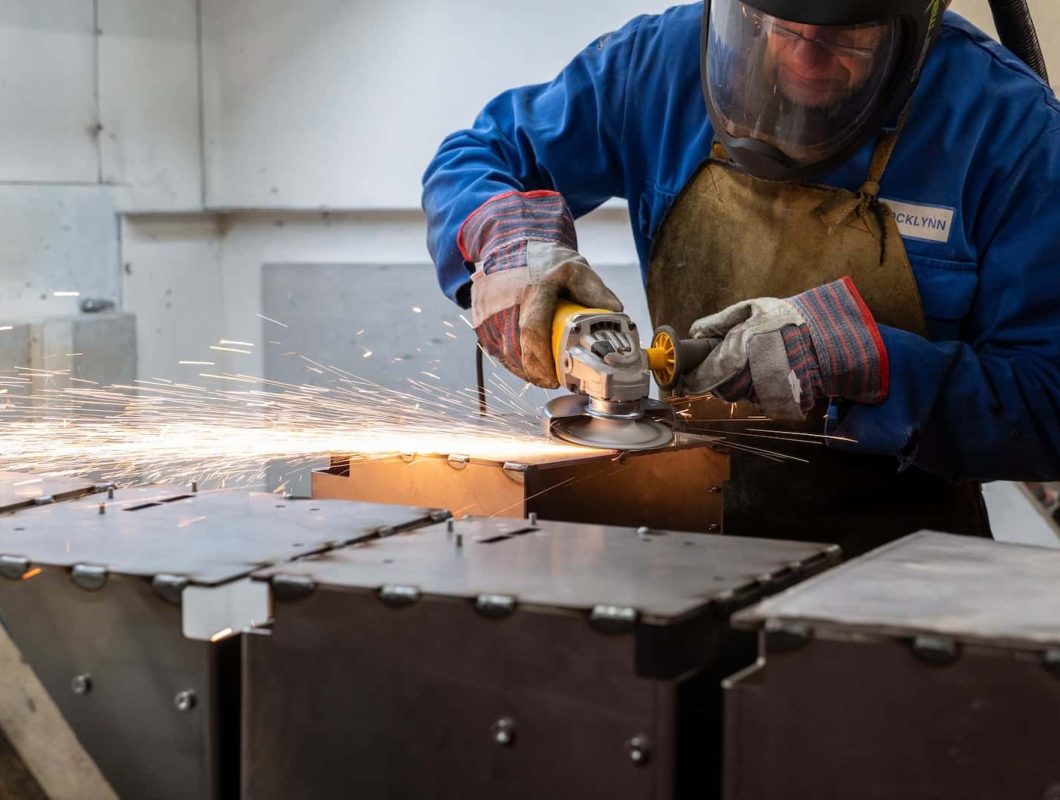
Mild steel is the workhorse material for general fabrication. Its versatility, cost and availability make it the default choice for the broadest range of fabricated products and structures. The types of mild steel fabrication we carry out cover everything from light-gauge enclosure work through to heavier structural assemblies. We manufacture mild steel components for applications including:
We manufacture custom electrical enclosures in mild steel to any size and configuration, from wall-mounted housings to floor-standing cabinets.
Our customers include OEMs, design houses and systems integrators who need a reliable partner for ongoing production. Among mild steel fabrication companies, we stand out by handling the complete process in-house. We support both custom metal fabrication projects and repeat manufacturing with the same precision and turnaround.
Mild steel is the most cost-effective fabrication material for the majority of industrial applications. It is widely available in a full range of sheet and plate thicknesses, it machines, welds and forms easily, and it accepts powder coating and plating finishes without special preparation. For mild steel general fabrication through to precision assemblies, it remains the most practical and economical choice.
Where corrosion resistance is not the primary concern, mild steel outperforms stainless and aluminium on cost while delivering more than adequate strength and durability. With the right finish applied, mild steel products perform reliably in indoor environments, dry industrial settings and protected outdoor applications.
Mild steel is also the easiest metal to work with from a manufacturing perspective. It cuts faster, bends more predictably and welds more forgivingly than stainless steel or aluminium. This translates directly into shorter lead times, lower production costs and fewer manufacturing complications on your projects.
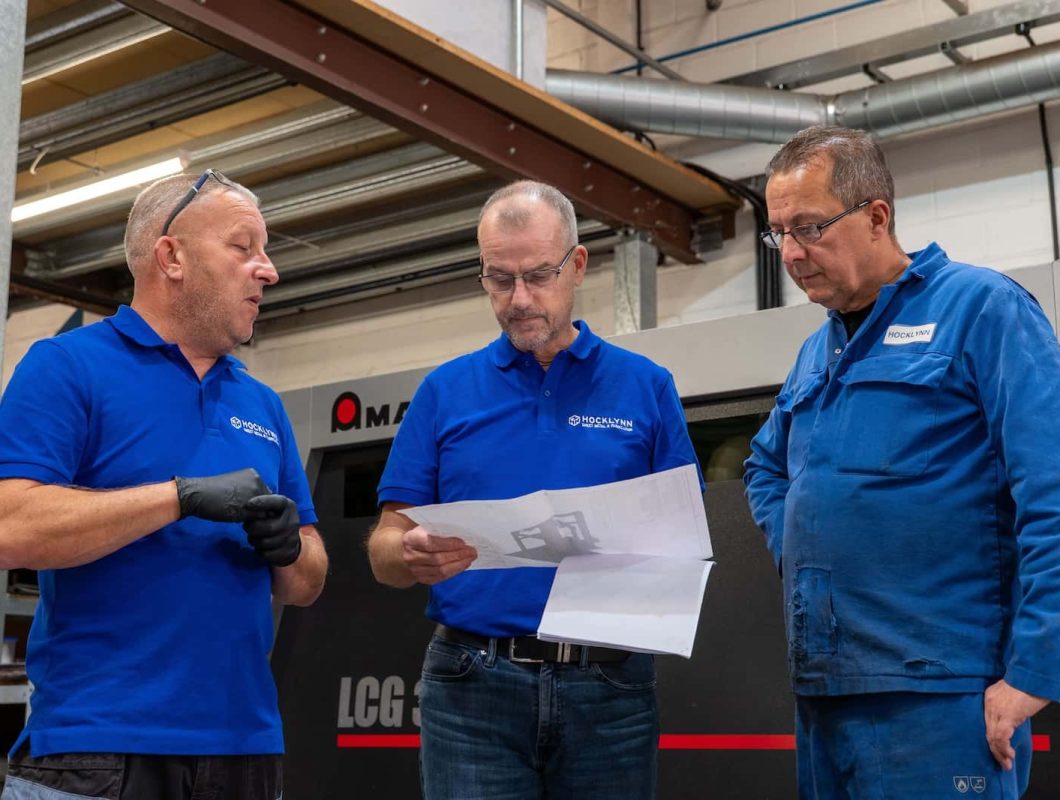
We review every mild steel project for manufacturability before production starts. This includes checking bend radii, material thicknesses, weld joint access, tolerance stacks and assembly sequences. Getting the design right at this stage saves time and cost further down the line.
Our expertise in mild steel sheet fabrication means we can advise on the most efficient way to manufacture your parts. Small design changes, such as adjusting a bend radius, repositioning a hole or switching from a welded joint to a fastener, can reduce fabrication cost significantly without affecting product performance.
We work with your design engineers to flag potential issues early and suggest modifications. This DFM input is one of the main reasons our customers come back for repeat work.
Many mild steel projects start as a prototype or small development batch. We offer fast turnaround on first articles, then store all CNC data and tooling setups so repeat orders can be produced efficiently without re-engineering.
Our sheet metal prototyping capability delivers quick-turn mild steel prototypes using the same processes and equipment as full production runs.
Most of our mild steel customers run scheduled call-offs against a blanket order. We hold your CNC programs, keep materials in stock where volumes justify it, and deliver parts to your production schedule. Reliable delivery matters as much as quality, and we manage both.
Mild steel fabrication is the process of cutting, forming, welding and finishing low-carbon steel sheet and plate into finished components and assemblies. Mild steel is the most widely used fabrication material due to its combination of strength, formability, weldability and cost. At Hocklynn, we specialise in mild steel sheet metal fabrication for industrial and OEM applications.
MIG welding is the most common method for mild steel fabrication, offering fast, strong joints across a range of thicknesses. TIG welding is used where a neater finish is required, typically on visible components or thinner gauge materials. We also use spot welding and stud welding depending on the application.
We regularly fabricate in CR4 cold rolled steel, hot rolled steel, pickled and oiled steel, and structural grades S235, S275 and S355. The right choice depends on your application, surface finish requirements and budget. We can advise on the best grade for your project.
Mild steel costs less, forms more easily and welds faster than stainless steel. Stainless is the better choice where corrosion resistance, hygiene requirements or a premium uncoated finish are needed. For most industrial equipment, enclosures and structural components where a powder coated or plated finish is acceptable, mild steel is the more economical and practical option.
Lead times depend on complexity, batch size and current factory loading. Simple laser cut and formed parts can ship within a few days. Welded assemblies with powder coating typically take 2 to 3 weeks. Repeat orders are faster because all setup work is already complete.
Need a quote, technical advice or lead time confirmation? Send us your drawings or specifications and one of our engineers will get back to you with clear pricing and a realistic schedule.
Call 0117 951 7572 or email sales@hocklynn.co.uk