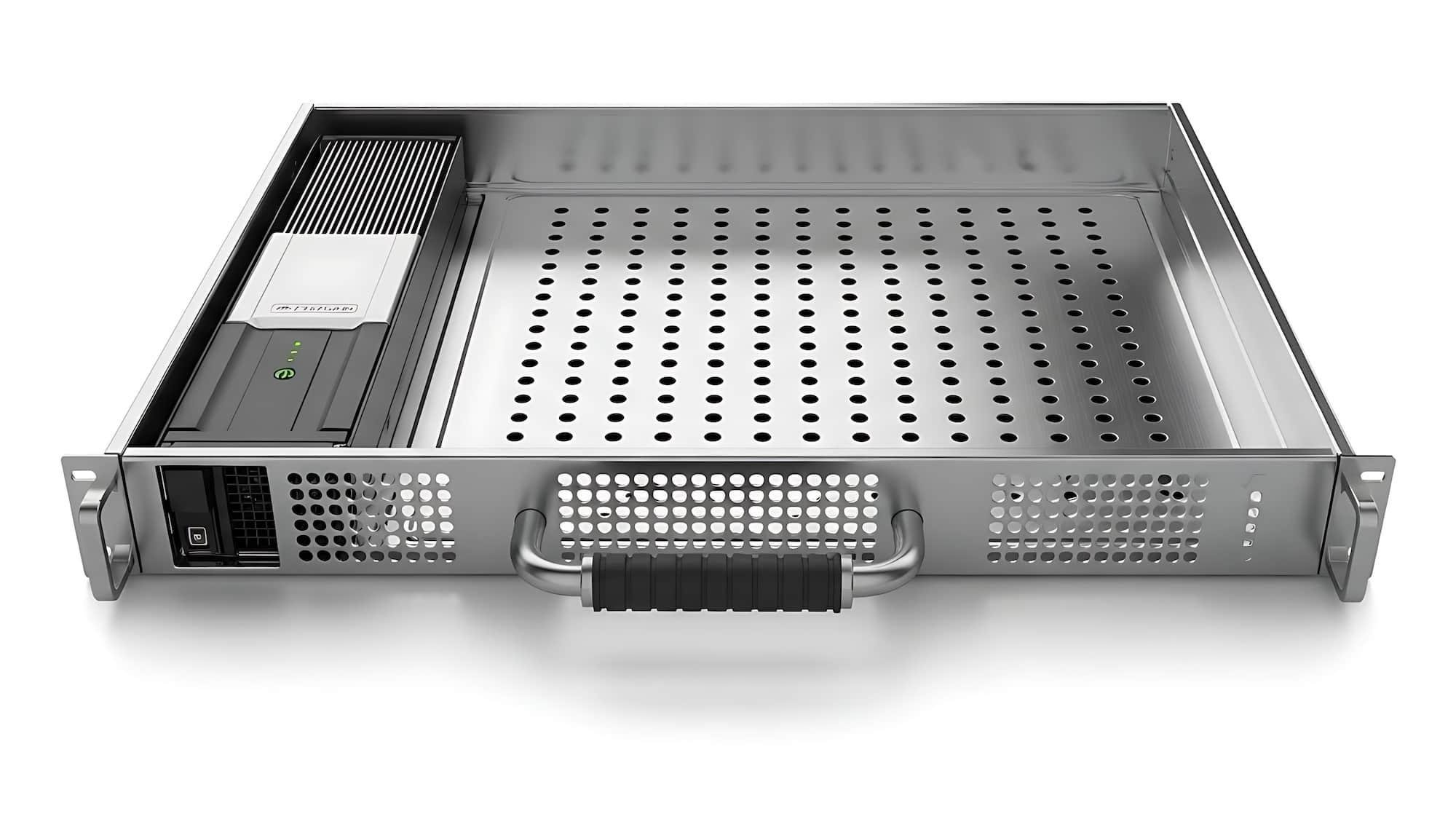
Electrical enclosures are protective housings designed to keep your electrical components safe from dust, moisture, impact and unauthorised access. While off-the-shelf plastic electrical enclosures and standard polycarbonate enclosure options suit basic applications, many industrial and commercial projects demand something more specific. That is where custom fabrication comes in.
As a custom electrical enclosures manufacturer based in Bristol, Hocklynn produces metal enclosures for electrical systems that are engineered around your exact requirements. We work with mild steel, stainless steel and aluminium to fabricate enclosures in any configuration, whether you need a compact wall mounted junction box, a floor standing electrical cabinet, or a large free-standing enclosure for complex power distribution equipment.
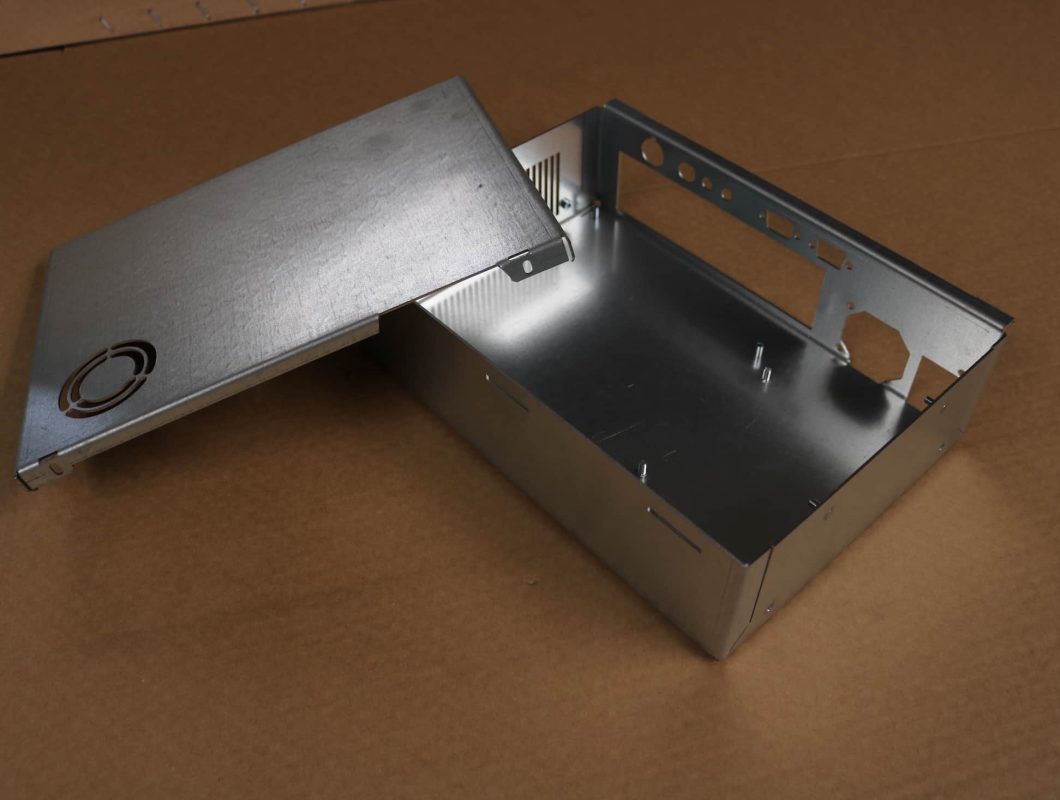
Every enclosure we produce is laser cut, CNC folded and welded in-house, with surface finishing managed through our established local finishing partners. This integrated approach gives us full control over tolerances, lead times and quality throughout the manufacturing process. Our engineering team can work from your finalised drawings or collaborate with you on design for manufacture improvements that reduce cost and improve assembly efficiency before production begins.
Unlike suppliers who sell standard catalogue products, we fabricate each electrical enclosure from raw sheet material to your specification. This means no compromises on dimensions, cutout positions, mounting arrangements or material selection. Whether you are prototyping a new product or running scheduled production batches, every enclosure is manufactured to the same standard of precision and finish.
Metal enclosures offer clear advantages over plastic enclosures and ABS enclosures in demanding environments. Steel electrical enclosures provide superior structural rigidity, better EMC shielding for sensitive electronic equipment, and greater resistance to impact and vandalism. For applications involving heat-generating components, metal construction also improves thermal management compared to enclosed plastic housings.
We fabricate electrical enclosures in three primary materials, each suited to different operating conditions and budget requirements.
Mild steel is the most widely used material for general purpose enclosure fabrication. It offers excellent strength at a competitive price point and is typically finished with powder coating to provide long-lasting corrosion protection. Mild steel cabinet enclosures are well suited to indoor industrial environments, control rooms, plant rooms and equipment housings where the enclosure is not directly exposed to corrosive atmospheres. The majority of electrical enclosures UK manufacturers produce are mild steel, and for good reason: it is strong, economical and highly versatile.
Stainless steel electrical enclosures are specified where corrosion resistance is a primary concern. We work with both 304 and 316 grade stainless steel, producing enclosures for washdown environments, coastal installations, chemical processing areas and outdoor sites exposed to weather. Our stainless steel electrical enclosures UK customers include OEMs and systems integrators across sectors where long service life and minimal maintenance are non-negotiable requirements.
Aluminium electrical enclosures offer a lightweight alternative with naturally good corrosion resistance. Aluminium is particularly suited to electronics enclosures and portable equipment housings where weight is a consideration, as well as outdoor installations where the combination of low weight and weather resistance reduces mounting and structural requirements.
The choice between these materials depends on your operating environment, protection requirements, expected service life and budget. Our engineering team can advise on the most appropriate material for your application, taking into account factors such as ambient temperature, humidity, chemical exposure and physical risk.
Our electrical enclosure manufacturing process follows the same disciplined approach we apply to all sheet metal fabrication at Hocklynn. Every project begins with a thorough review of your design files and requirements, ensuring we understand the application before any material is cut.
Our CAD team works in SolidWorks to prepare a production-ready sheet metal CAD design from your drawings, sketches or 3D files. If your design would benefit from adjustments to improve manufacturability or reduce cost, we will flag these during the review stage. This design for manufacture input is one of the key reasons customers choose to work with us rather than sending files direct to a cut-and-fold operation. Small changes to bend radii, material thickness, hardware positions or panel jointing methods can significantly reduce production cost and improve consistency across batches.
We accept files in DXF, DWG and STEP formats. For customers starting from a concept or rough sketch, our engineers can develop the full enclosure design from scratch, producing complete manufacturing drawings ready for production sign-off.
All flat blanks and profiles are cut on our CNC fibre laser, producing clean edges with tight tolerances and minimal material waste. Cut programs are generated directly from SolidWorks, eliminating file translation errors and reducing setup time. Our fibre laser handles mild steel, stainless steel and aluminium across a wide range of thicknesses, producing the panels, brackets, gussets and mounting plates that make up a complete enclosure assembly.
Our LVD 8-axis Easy-Form press brakes handle everything from simple bracket folds to complex multi-bend enclosure shells. Bend allowances and forming sequences are programmed by our engineers and verified against design intent before production begins. This ensures enclosures assemble squarely with consistent gap and flush across every unit in a batch. For box-form enclosures requiring multiple bends in sequence, our press brake tooling and programming capabilities allow us to produce complete enclosure bodies from single blanks where the geometry permits.
Enclosure fabrication typically involves MIG and TIG welding to join formed panels into rigid, sealed housings. Our welders are experienced in working with all three material types and understand how weld sequence, heat input and fixturing affect dimensional accuracy and surface appearance. We also perform stud welding, fastener insertion and self-clinching hardware installation for mounting brackets, cable glands, DIN rails and internal mounting plates. Where required, we can supply enclosures fully assembled with fitted components ready for your wiring team.
Surface finish depends on material and application. Mild steel enclosures typically have powder coating applied in RAL colours to provide durable protection and a professional appearance. Stainless steel enclosures can be supplied with brushed, grained or polished finishes achieved through specialist hand techniques. Aluminium enclosures may be anodised or powder coated depending on the operating environment. All finishing work is managed through our production process and inspected before dispatch.
The range of custom electrical enclosures we manufacture covers a wide spectrum of applications. Because every enclosure is built to order, there are no catalogue constraints on dimensions, material selection, cutout positions or internal configuration.
Wall mounted enclosures and electronics enclosures for control systems, instrumentation and data logging equipment are among the most frequently requested products. These compact housings mount directly to walls or structural steelwork and are designed with hinged or removable doors for access to internal components. Cable entry positions, gland plates and internal mounting rails are all specified to suit your wiring layout.
Floor standing enclosures and free-standing electrical cabinets serve applications where larger volumes of equipment need to be housed, such as power distribution, motor control centres and industrial automation panels. These enclosures can be fabricated with compartmentalised interiors, multiple door configurations and integrated cable management features including trunking routes, cable trays and segregated power and data sections.
Outdoor weatherproof electrical enclosures and waterproof electrical enclosures designed to meet IP65, IP66 and above are manufactured for outdoor and harsh-environment installations where dust and moisture ingress would compromise the equipment inside. Electrical boxes and enclosures for roadside infrastructure, car park systems, EV charging points and telecoms equipment form a regular part of our production schedule.
Industrial electrical enclosures for factory environments, process areas and heavy industrial applications are built to withstand vibration, impact, dust and temperature extremes. These enclosures often use heavier gauge materials and reinforced construction to meet the demands of their operating environment.
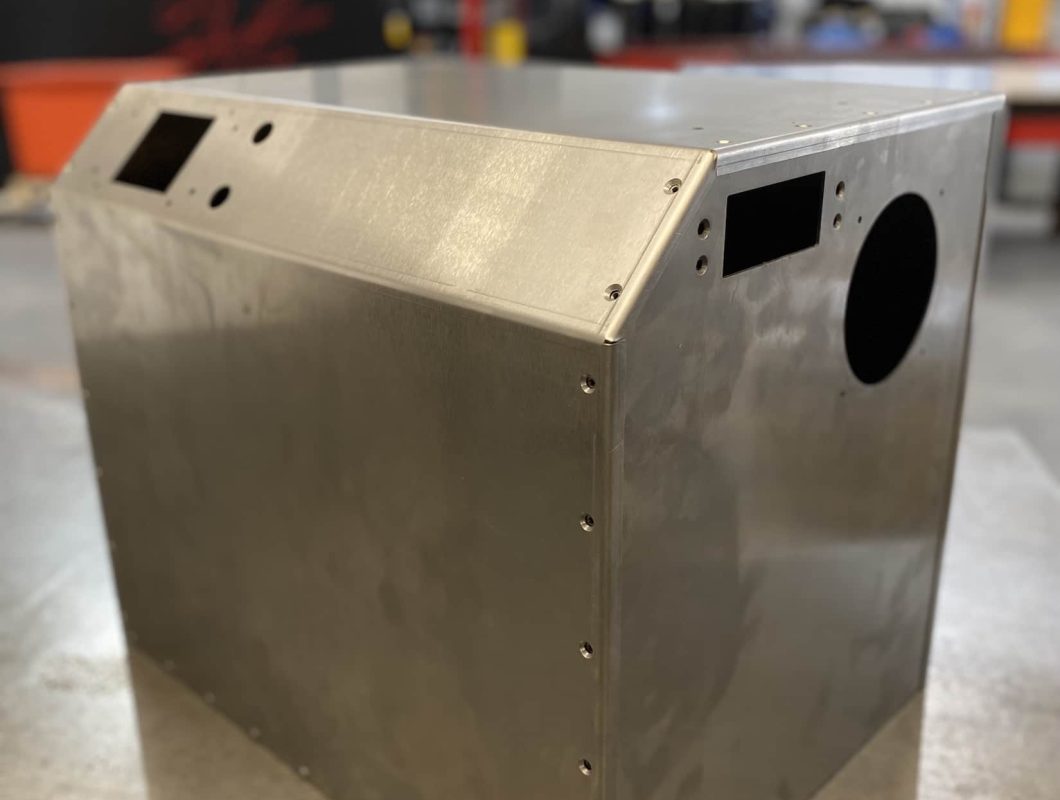
Standard off-the-shelf electrical enclosure products meet the needs of many straightforward installations. However, when your application requires non-standard dimensions, specific cutout patterns, integrated mounting hardware, a particular material and finish combination, or any feature not available in a catalogue product, custom fabrication is the practical solution.
Custom electrical enclosures eliminate the need for site modification of standard housings, reduce installation time, and result in a cleaner, more professional finished product. For OEMs building enclosures into their own equipment, custom fabrication ensures every unit is identical and production-ready, removing the variability that comes from adapting standard enclosures on site or in the workshop.
Our sheet metal prototyping service delivers quick-turn enclosure prototypes using the same processes and materials as full production runs.
Our customers include OEM manufacturers, systems integrators, control panel builders and engineering consultancies across the UK. Many operate on repeat production cycles where consistent quality and reliable delivery are more important than the lowest possible unit price. We support these customers with scheduled batch production, blanket order call-offs and dedicated part files that can be recalled and run with minimal setup time on repeat orders.
Hocklynn has been fabricating sheet metal products in Bristol for over 50 years. We understand the practical realities of electrical enclosure design and can advise on material selection, IP rating requirements, ventilation strategies, cable entry points and internal layout to ensure your enclosure performs as intended in its operating environment.
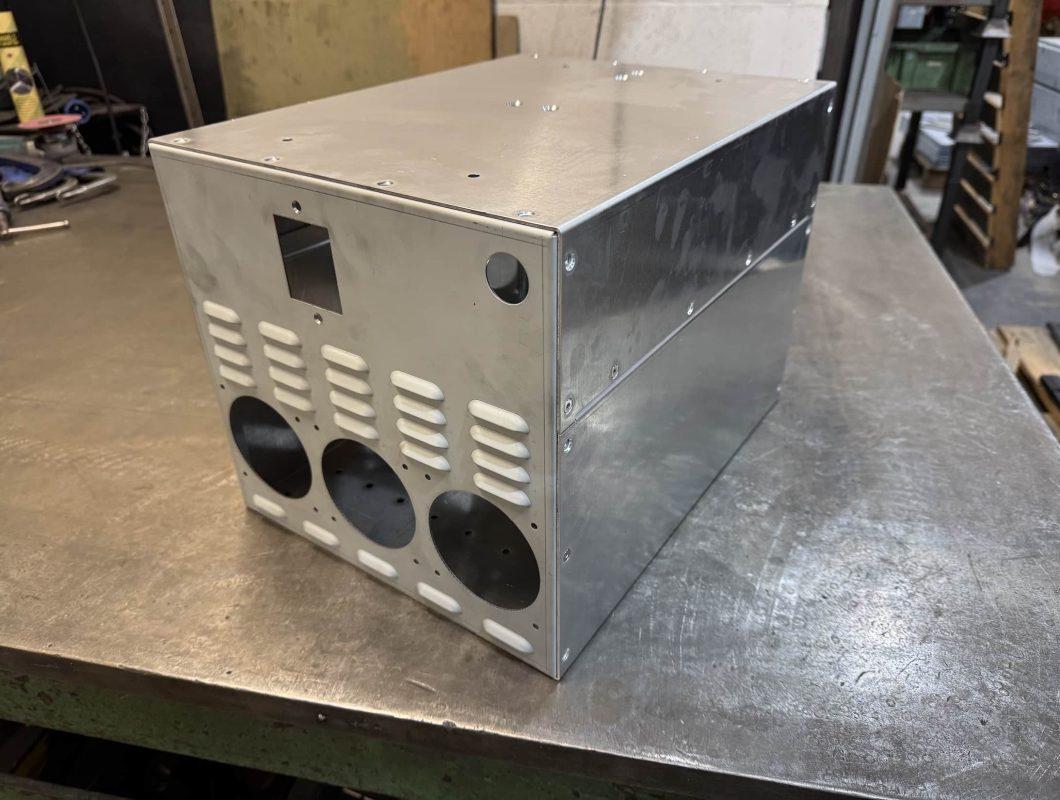
An electrical enclosure is a protective housing that contains electrical components, wiring and control equipment. Enclosures shield sensitive electronic equipment from dust, moisture, physical impact and unauthorised access while also providing a secure mounting structure for internal components such as circuit breakers, contactors, PLCs and terminal blocks.
Electrical enclosures are categorised by mounting method (wall mounted, floor standing, free-standing, pole mounted), material (mild steel, stainless steel, aluminium), and environmental protection rating (IP55, IP65, IP66 and above). Common types include general purpose enclosures for indoor use, weatherproof outdoor enclosures, industrial cabinet enclosures for factory environments, junction boxes for cable termination, and specialist housings for specific applications such as motor control, power distribution or data equipment.
A Type 4 enclosure is a NEMA classification indicating the housing is suitable for indoor or outdoor use and provides protection against windblown dust, rain, splashing water, hose-directed water and ice formation. The approximate IEC equivalent is IP66. Hocklynn can fabricate enclosures to meet NEMA and IEC protection ratings as required by your application and target market.
Custom metal electrical enclosures are manufactured through a series of sheet metal fabrication processes. Flat sheet material is laser cut to produce panels and blanks, then CNC folded to form the enclosure body, doors and internal components. Panels are welded together to create a rigid structure, hardware such as hinges, locks, cable glands and mounting rails is inserted, and the enclosure is finished with powder coating, anodising or surface treatment appropriate to the operating environment. At Hocklynn, these processes are managed through our Bristol facility, with powder coating handled by trusted local finishing partners and all other operations carried out in-house.
A NEMA Type 2 enclosure is designed for indoor use and provides protection against limited amounts of falling water and dirt. It is a basic level of protection suited to clean indoor environments such as offices, server rooms and light commercial settings. For industrial or outdoor applications, higher-rated enclosures such as Type 4, Type 4X or their IP-rated equivalents are typically required.
For most outdoor installations in the UK, IP65 or IP66 provides adequate protection against rain, dust and hose-directed water. Coastal or marine environments may require IP66 or IP67 combined with stainless steel construction for long-term corrosion resistance. We can advise on the appropriate rating based on your specific installation environment and the equipment being housed.
Yes. We accept drawings and 3D models in DXF, DWG and STEP formats. If you would like design for manufacture input before committing to production, our engineering team can review your files and suggest practical improvements that reduce manufacturing cost or improve assembly without changing the enclosure’s function.
Need a quote, technical advice or lead time confirmation? Send us your drawings or specifications and one of our engineers will get back to you with clear pricing and a realistic schedule.
Call 0117 951 7572 or email sales@hocklynn.co.uk